
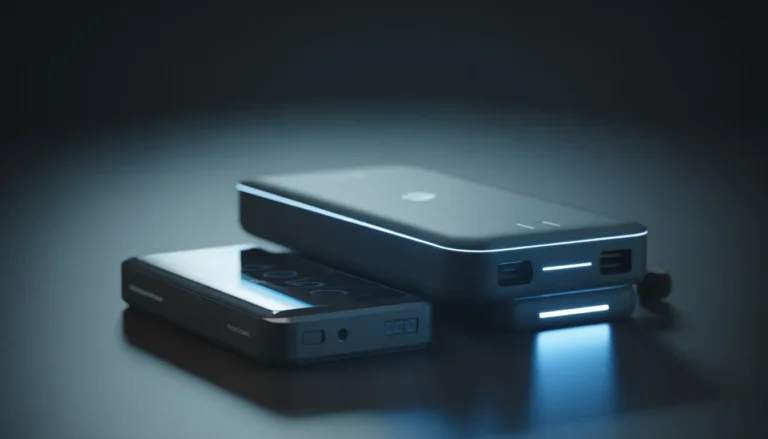
Best Power Banks for Travel & Daily Use (2026 Buying Guide)

Azmuth 10000mAh magnetic power bank for iPhone
CategoryRecommended Power BankBest For
Best Magnetic / MagSafe-CompatibleAzmuth 10,000mAh Magnetic Power BankiPhone users who want magnetic wireless charging
Best Overall / High CapacityAnker 20000mAh PowerCore IIITravelers and heavy users needing laptop-capable output
Best Compact / BudgetBaseus Slim Power BankEveryday pocket carry
Best for Fast Multi-Device ChargingRAVPower PD 20000Charging phone and tablet together, quickly

Four solid options, four different priorities. If you only remember one thing from this table: capacity and charging speed matter, but so does how the power bank actually fits into your day — a 20,000mAh brick you leave in a drawer because it’s too bulky to carry does less for you than a smaller one you actually bring along. With that in mind, here’s a closer look at each pick, starting with the one we’d point most iPhone owners toward first.

If you carry an iPhone and you’re tired of fumbling with a charging cable in your bag, this is the category worth paying attention to. The Azmuth 10,000mAh magnetic power bank snaps directly onto the back of a MagSafe-compatible iPhone and starts charging wirelessly — no cable, no port to line up in the dark. It pairs 10,000mAh of capacity with up to 15W magnetic wireless charging, up to 20W USB-C PD wired output for when you need speed, a built-in adjustable metal kickstand, and a digital LED display that shows an exact battery percentage instead of a row of blinking dots.

Azmuth 10000mAh magnetic power bank for iPhone

According to the manufacturer, it’s compatible with the iPhone 12 through 17 series, including Pro, Pro Max, and Plus variants where those exist for each generation. It’s rated for up to 18W input when recharging the power bank itself, and it accepts both USB-C and Lightning cables for that recharge, which is a small but genuinely useful detail if you’re switching between an iPhone and other devices that still use different cable standards.

The magnetic attachment is really the whole appeal here. Instead of plugging a cable into your phone, you place the power bank against the back of the phone and the magnets align and hold it in place while wireless charging kicks in. It’s MagSafe-compatible rather than an official Apple accessory, but the practical result is the same convenience: one-handed attachment, no port wear on your phone, and the ability to keep using your phone while it charges without a cable getting in the way.

Azmuth MagSafe compatible magnetic power bank

Because the power bank attaches magnetically and includes an adjustable metal kickstand (0° to 60°), it doubles as a stand once it’s attached — genuinely useful for video calls, watching something while it charges, following a recipe on the counter, or propping your phone up on an airplane tray table or nightstand. It’s a small addition, but it removes the need for a separate stand, which matters when you’re trying to pack light.

A lot of power banks give you 4 or 5 LED dots to estimate how much charge is left, which really only tells you “some,” “half,” or “almost empty.” The Azmuth’s digital display shows an actual percentage, 0–100%, along with charging status — enough precision to actually plan around, like knowing whether it’ll get your phone through the rest of a travel day or whether you should top it up tonight.

Azmuth magnetic power bank with adjustable metal stand

Per the manufacturer, it supports charging up to three devices at once — magnetic wireless for your iPhone plus wired charging for another device or two through the USB-C port and cable input. Worth setting expectations correctly here: charging multiple devices simultaneously generally means each one charges a bit slower than it would alone, since the total output is shared, not multiplied. On the safety side, it includes 8-layer circuit protection, Foreign Object Detection (FOD) to prevent the magnetic charging surface from trying to charge something it shouldn’t, and temperature control.

Azmuth 10000mAh power bank with LED battery display

At 4.09 × 2.68 × 0.79 inches and 0.42 lb, it’s genuinely pocketable — noticeably smaller than the 20,000mAh bricks in this guide, which is the tradeoff for choosing capacity here. Per the manufacturer’s figures, that translates to roughly 2.5 charges for an iPhone 15 Pro and around 1.8 for a Pro Max — we’re passing along that number as supplied information rather than independent testing, so treat it as a general reference point rather than a guarantee. For most people, 10,000mAh is the practical sweet spot for travel and daily carry: enough to get through a full day or top off a couple of times, without the bulk of a laptop-capable power bank you don’t actually need for a phone.

This one makes the most sense for iPhone owners — specifically those on a MagSafe-compatible model — who value convenience over raw capacity. That covers a pretty wide range of people in practice: commuters who want to top off during the day without carrying a cable, students moving between classes, office workers who like the stand for video calls, and travelers who want one compact accessory that also props their phone up on a nightstand or tray table. If seeing an exact battery percentage instead of guessing from indicator lights matters to you, that’s another point in its favor.

If you regularly need to charge a laptop, or you’re the type of traveler who wants one power bank to last several days without an outlet, 10,000mAh isn’t the right category regardless of the magnetic feature — the Anker below is the more sensible choice. Magnetic charging is also only a benefit if your phone actually supports it; if you’re on an older iPhone, an Android device, or you just don’t have a magnetic case, the Azmuth still works as a standard wired charger, but you’re not getting its main advantage. And if your only priority is the smallest, cheapest pack that gets the job done, a bare-bones model like the Baseus will serve you just as well for less.

Pros: 10,000mAh capacity, magnetic wireless charging up to 15W, up to 20W USB-C PD wired output, built-in adjustable stand, digital percentage display, compact and lightweight, multi-device charging support, 8-layer safety protection with FOD and temperature control.

Cons: 10,000mAh isn’t intended to replace a high-capacity power bank if you’re charging a laptop or need several full phone charges back-to-back — the Anker below is the better fit for that. The magnetic charging is only useful if your phone supports MagSafe-style magnetic attachment; on a non-compatible device, it functions as a standard wired power bank instead. And if you specifically want the smallest possible pack with zero extra features, the kickstand and display add a small amount of size compared to a bare-bones slim power bank.

For travelers who need to charge a laptop or squeeze several full phone charges out of one pack, this is the option built for that. 20,000mAh capacity with 65W USB-C fast charging means it can realistically top off a laptop as well as a phone, in a design that’s still reasonably travel-friendly for its size. Pros: charges phone and laptop fast, reliable brand, durable build. Cons: noticeably heavier than the compact options here. Best for: travelers and professionals who need high-capacity charging on the go.

A 10,000mAh pack in a genuinely slim, lightweight body with 20W USB-C output — this is the pick if your priority is forgetting it’s even in your bag. Pros: ultra portable, affordable, smooth finish. Cons: lower output than the high-capacity models here, so it’s better suited to phones than laptops or tablets. Best for: everyday users who prioritize portability and price over extra features.

20,000mAh with 60W PD fast charging and dual-device support, aimed at people regularly charging more than one thing — phone and tablet, or phone and a partner’s phone — without waiting around. Pros: charges multiple devices quickly, reliable safety features, premium build. Cons: sits at a slightly higher price point than the budget options. Best for: heavy users who need fast-charging and multiple-device support regularly.

Note: pricing and availability for the Anker, Baseus, and RAVPower models above can change, so check current listings directly on Amazon before buying.

ProductCapacityCharging TypeOutputBest For
Azmuth Magnetic Power Bank10,000mAhMagnetic wireless + wired15W wireless / 20W USB-C PDiPhone users wanting magnetic charging
Anker 20000mAh PowerCore III20,000mAhWired65WLaptops & heavy daily use
Baseus Slim Power Bank10,000mAhWired20WCompact everyday carry
RAVPower PD 2000020,000mAhWired60W PDFast multi-device charging

5,000mAh packs are genuinely pocket-sized but usually only good for a single top-up. 10,000mAh, like the Azmuth and Baseus options here, is the practical middle ground — enough to comfortably get a phone through a full day without much added bulk. 20,000mAh and up, like the Anker and RAVPower, makes sense if you’re charging a laptop, traveling for multiple days between reliable outlets, or regularly topping off more than one device.

USB-C PD (Power Delivery) is the standard worth prioritizing — it’s faster and more broadly compatible than older USB-A charging. 18–20W is generally enough to fast-charge a phone; 60W and above starts to matter if you’re charging a laptop or tablet. Wireless and magnetic charging, like the Azmuth’s 15W MagSafe-compatible charging, trades a small amount of speed for the convenience of skipping the cable entirely.

USB-C has become the standard worth prioritizing — it’s reversible (no flipping the cable twice to get it right), generally faster, and it’s what most new phones, including recent iPhones, actually ship with. USB-A ports still show up on some power banks for compatibility with older cables and accessories, which is handy if you’ve got a drawer full of legacy cables, but it’s not something to seek out if you’re buying new gear.

A traditional power bank charges through a cable, full stop — it works with essentially any phone, but you have to plug it in every time. A magnetic, MagSafe-compatible power bank like the Azmuth attaches directly to a compatible iPhone and starts charging wirelessly, which is more convenient day-to-day but only works with devices that support that magnetic charging standard. If you switch between multiple phone types or use an older or non-compatible device regularly, a traditional wired power bank is the safer, more universal choice.

For travel, weight and size matter almost as much as capacity — you’re carrying it through airports, in a daypack, or in a jacket pocket for hours. The Azmuth’s compact 0.42 lb footprint plus its built-in stand (handy for airplane tray tables and hotel nightstands) makes it a strong travel companion for iPhone users, while the Anker is the better travel pick if you also need to charge a laptop on the road.

For daily carry, the priority usually shifts toward something you barely notice in a bag or pocket, paired with charging that’s fast enough not to think about. The Baseus covers the “barely notice it” side well, while the Azmuth’s magnetic attach-and-go convenience makes it easy to top up at a desk or in the car without hunting for a cable.

Power banks are generally allowed in carry-on luggage, and most airlines follow guidance based on watt-hours rather than mAh capacity. Rules can vary by airline and by country, so rather than treat any number here as a guarantee, check your specific airline’s current policy and applicable aviation regulations before you fly.

Per the manufacturer’s supplied compatibility information, yes — it covers the iPhone 12 through 17 series, including Pro, Pro Max, and Plus variants where those models exist.

It’s MagSafe-compatible, meaning it uses magnetic alignment and wireless charging in the same style as Apple’s MagSafe system, offering up to 15W wireless output.

Yes, the Azmuth supports charging up to three devices — magnetic wireless plus wired connections — though charging several devices simultaneously will generally be slower per device than charging one alone.

Yes, a built-in adjustable metal kickstand that moves from 0° to 60°, useful for video calls, watching video, or propping your phone up hands-free while it charges.

An exact battery percentage from 0–100%, plus charging status, rather than a rough estimate from a handful of indicator lights.

For most single-day travel and phone-only charging, yes. If you’re traveling for multiple days without reliable outlet access, or need to charge a laptop, a 20,000mAh option like the Anker is a better fit.

Generally yes, in carry-on luggage — but always confirm current watt-hour limits and rules with your specific airline before flying.

If you have a MagSafe-compatible iPhone and want the convenience of magnetic, cable-free charging plus a built-in stand and a real battery percentage display, it’s a strong pick in that category. If you need higher capacity for a laptop or don’t have a magnetic-compatible device, one of the other options in this guide will serve you better.

There’s no single “best” power bank — there’s a best power bank for what you actually do. For iPhone users who want the convenience of magnetic, cable-free charging along with a built-in stand and a real percentage readout, the Azmuth 10,000mAh Magnetic Power Bank is our featured pick in that category and the one we’d point most iPhone owners toward first. If you need to charge a laptop or want maximum capacity for multi-day trips, the Anker 20000mAh is the better fit. For bare-bones portability and price, the Baseus covers that. Whichever direction fits your routine, capacity, charging speed, and portability are the three things worth weighing before you buy.

Amazon customer rating for the Azmuth power bank: 4.3 out of 5 stars (605 ratings), per Amazon at time of writing. This is Amazon’s reported rating, not an independent TechKKStore review score.

Need a reliable cable to go with your power bank? Check our Best 100W Charging Cables in 2026 picks.

Leave a Comment

Your email address will not be published. Required fields are marked *